Discover Ireland

Places of interest outside Dublin

Saddle up!

Getting around Dublin

No debt, no theft, no fret

Economic Living

Pages

Thursday, 5 April 2012

Cinemas in Dublin: pure entertainment or playful culture?

BY J. TREILLAUD

Are you tired of university work? Looking for some entertainment without spending too much of your money? Going to the movies may be your solution! Dublin is here to provide you with different kinds of cinemas depending on your mood or where you live, be it near the university or around the city centre.

For those of you living on campus or around it, the most convenient place to go is the Santry Omniplex. This eleven-screen complex shows box-office films and is only ten minutes’ walk away from DCU (in the Omni Shopping Centre). Its scheduled programme has mainly American and British films for the general public, which are always popular amongst students.

DCU's DVD collection by B. Vysoky
If you wish to go to the city centre to watch a movie, the Savoy is easy to find (on O'Connell Street). This seven-screen cinema has a programme similar to the Santry's, with identical prices: €6.20 with your student card. But this is far from being the only cinema in town there is a large number. The Screen, situated near Trinity College, is a charming place to go and have some fun. Take a peek at their special events schedule as this is a good way to see some of the classics. If you love blockbusters and have time to go often, you should check out Cineworld: they offer a monthly unlimited card at €19.99 which gives you the opportunity to see as many films as you want in the month. Also situated in the city centre, the bar 4 Dame Lane organizes free screenings every Thursday. It is worth having a look at their programme if you fancy a beer and fish and chips as well. But Dublin offers a wide variety of film genres and if you’re a film addict or feel like discovering something different, try the Lighthouse in Smithfield, which has just reopened, or the Irish Film Institute (IFI) in Temple Bar.

The is a diverse range of films shown at the IFI: many Irish films are to be found here if you want to discover Irish culture in a way that does not involve museums or books. The IFI does not focus only on Irish cinema, however, but also shows an assortment of European and international films. It offers both recent hits as well as retrospectives of famous film-makers organised throughout the whole year. Homesick? Chances are high that you can find a film from your country in the programme. If not, their DVD shop is full of European and Asian films, including most of the classics. If you want to improve your knowledge of Irish culture, you can have a look at their collection. It includes classic films about history such as In the Name of the Father or Michael Collins, and if you think books are too boring or time-consuming, there is a wide selection of screen adaptations of classic novels such as Joyce’s Ulysses or A Portrait of the Artist as a Young Man and the must-see film version of Roddy Doyle’s The Commitments.

Though those DVDs can make good gifts or souvenirs from Ireland, DVDs are quite expensive and not every student can afford them. I advise you to take a look at the university library which has a wide selection of films. The loan period is quite short so be sure to return the DVD within the next two days, as the fines increase quickly. Another good fact to know is the DCU Film Society which organises regular screenings (as part of a society you can join it for €2 and have access to the showings for free).

In Ireland the films are released on Friday so the cinema programmes change before the weekend. The last screenings are around 8.30-9pm so don’t expect to go there late at night. Be sure to check different programmes as cinemas such as the Lighthouse offer late-night showings at the weekend.

As you may have noticed, Dublin offers different types of films which can be a pleasant break between the work and the parties of student life. And if you are an international student who wishes to learn English, going to see a film in its English version is a good way to improve whilst still having fun.

No debt, no theft, no fret


BY B. SIEJA 

Plan your budget wisely by B. Sieja
They say money makes the world go round, that’s a given, but it also can get you into trouble if you’re not careful. Every year thousands of people come to Ireland to study. They leave their countries, families and friends and plunge into the unknown. They face new responsibilities and challenges and for many it’s their first time away from home. Moving abroad, managing and protecting your money, especially in such tricky economical times present many difficulties. Getting into debt, having your credit card details stolen or worrying about it  may cast a shadow on your college experience. Fret no more as there is a solution to your problems.

Two big Irish companies o2 and 3v designed disposable credit cards that work just like your top-up mobile phone. When you get one, you simply put on the amount  you want to spend and shop away. Both cards allow you to purchase goods from online websites. The o2 card also allows you to pay for goods in shops and restaurants. With disposable credit cards you won’t spend more than you have planned, you won’t get a nasty bill and you save yourself a few bob by avoiding paying the interest rate. So how do you get one? It’s simple! Both cards can be ordered online with o2 being also available in their stores. There is no charge for 3v cards and future top-ups under twenty euros. o2 sells its cards for 4.99e and charge between 50 cents and 3 euro per transaction. Applied cost depends on the amount you want to add to your card. Both companies ensure that topping up your card is easy and have lists of outlets available from o2 and 3v websites. If you own a smart-phone you can also download the o2 app which allows you to quickly check your balance and shows top-up outlets nearby.

o2 card app and 3V card by B. Sieja
It is a new and safer way to shop online which can also help students plan their spending. Many of us have very little or no financial support so managing and controlling your pennies is necessary. First, you need to learn how to plan your spending. Decide on a time frame; how many days or weeks will suit you and your budget best? A week? A month? You can match it with bigger bills that clearly mark days such as rent. It is useful to create a list of your basic expenses e.g. rent, phone credit, Internet and then count how much exactly you must put aside to cover it. Once the bills are taken care of you know exactly what’s left for your groceries and perhaps entertainment.

There are various markets offering low prices on everyday products. Tesco, Lidl and Aldi are considered the cheapest with variety of great discounts and special offers. For clothes you can get bargains in Dunnes, Penneys or TK max, all located in city centre. And let’s not forget about the post-Christmas sale that lasts all January. There is also a number of websites that offer good deals on products as well as entertainment. You can avail of discounts offered by Living Social, Groupon, Grab One or Freebie List to name a few. Websites offers vary tremendously! From restaurant deals, spa treatments, tickets and entries for numerous events, travel deals to freebies and trial products. Although it all sounds good and inviting remember not to be too easily tempted by special offers. Try to stick with your budget. Unfortunately no matter how much you plan your spending unforeseen or spontaneous expenses can happen. If it happened to you check whether or not you can return the purchased item and no matter how badly off you are do not borrow money from your friends or bank. Borrowing is a temporary solution and being in debt only expands list of bills. 


Penny saved is a penny earned by B. Sieja
A disposable credit card can help narrow the possibilities of over spending and the trap of debt. The card won’t allow you to pay for goods if you didn’t top it up. It can also help protect you from theft. We all have  a friend or a relative who got the bill  for  a plasma TV or a holiday in Dubai... Disposable credit cards have no connection to your main money source (be it a bank account or a sock under your mattress) so in the case of your details being compromised your money is safe and you can sleep soundly.

Sunday, 1 April 2012

Discovering Ireland

BY A. INHARJANTO

Dublin is no doubt a touristic, multicultural and vibrant city. When going around Dublin city centre, you will enjoy its brilliant atmosphere and will meet numerous people of different nationalities. You will also find lots of lively hubs, say, pubs, cinemas, theatres, clubs, sport centres, music halls, etc. It is a city with a jam-packed calendar of festivals and events.
However, if you are keen to further explore this Emerald Isle and move outside Dublin, the following places might interest you. Do not miss visiting them while living in Ireland as they can easily be reached by public transport especially by bus or train.

Glendalough and the Wicklow mountains

The glens of Wicklow by B. Trope
Located in County Wicklow, the scenery of Glendalough and its old monastic site are certain to create enduring memories. Glendalough is an Irish name, meaning ‘the valley of the two lakes’. From the visitor centre, it is best to hike so as not to miss the lovely views. After walking for about 15 minutes you will arrive at the Lower Lake. Do not spend too long here as there are plenty of other beautiful spots not to be missed. By following the signs, you will easily reach the Upper Lake.  This area has plenty of space for picnics, playing games, sitting around, etc. Nobody will be bored by the natural beauty of the Upper Lake calmly lying at the foothills and between two deep narrow valleys.
 
If all this is not enough and you want more adventure, feel free to go hill-walking. Hikers are well catered for in and around Glendalough and the surrounding area with an abundance of signposts leading the way. You would need to prepare for this, say, by taking some water and wearing good shoes as it can be  challenging at times and needs extra care along some parts of the routes.  

Furthermore, adjacent to the tourist centre and the car park, there is the site of St. Kevin’s monastic city. It is believed the monastery was established in the 6th century and survived attacks from the Vikings. An 11th century 34-metre round tower, high crosses and monastic ruins are still there as witnesses to the monastery’s remarkable history.

Besides Glendalough, if you have seen films like Braveheart and P.S. I Love You, you will enjoy panoramic drives through the Wicklow mountains, where those films were shot. There is Glenmacnass Waterfall famed for its splendid view. Travel to the Wicklow mountains during spring, summer, and autumn is obviously best. You are advised not to drive there in winter due to snow and icy roads.  

Galway and the Cliffs of Moher

The lovely ambience of Galway city by A. Inharjanto
Fancy going to the west? Galway and the Cliffs of Moher are recommended destinations for many tourists and recently arrived international students are no exception. The two are famed for their rolling hills, rugged cliffs, astonishing forts, historic castles, quaint towns, fabulous food, vibrant nightlife and many other things besides. You will notice Galway is the best combination of the modern Ireland of the Celtic Tiger with the easy-going ambience and cultural richness of its Gaelic heritage. Moreover, in visiting Galway’s harbour where fishing boats are moored to the stone quays, you will get some idea of its people’s activities. 

If you prefer discovering Galway city more seriously and plan to visit other tourist destinations the next day, do stay in Galway. Student hostels are available, priced around €15 a night. Do not worry about getting lost as tourist information centres are easily found. You might fancy enjoying an afternoon in Eyre Square or at the Spanish Arch, which offer good craic. The impressive Galway Catholic cathedral is among such places of interest.
The breathtaking cliffs of Moher by H. Tulp
Further, the breathtaking cliffs of Moher (214m) should not be missed. Apparently, they are the most amazing cliffs in the world and Ireland’s finest natural attraction. You will surely gaze in awe at this majestic scene. Besides the Cliffs of Moher, Paddywagon Tours for example, offer a good price for students (€40) including the burren, Corcomroe Abbey, Dunguire Castle, Poulnabrone Dolmen, the beautiful fishing village of Doolin and Bunratty Castle in one-day tour. For further information, please check these websites: Day Tours Ireland and Paddywagon Tours. So, from the limestone and fossil lunar-like rock formation of the Burren to the rugged Atlantic shoreline and sheer splendour of the cliffs, you will be awe-inspired.

Belfast and the Giant’s Causeway

Despite being part of the UK, they are still on the same island of Ireland and worth exploring. If you can travel to the UK without a visa as a EU citizen, do not hesitate to do so. However, some international students are not automatically allowed to travel across the border without a UK visa. You have to make sure this matter is first considered because it really matters.

Belfast, Northern Ireland’s capital city, has impressive attractions for many visitors. Firstly, a warm welcome can be expected by the time you have arrived in the city where the famous Titanic was made. Then, you will finally get a fun-filled holiday experience in this second biggest city on the island. If your visit is well planned, your experience will be fantastic since the city offers its unique vibrancy and ambience. It is a region packed with fabulous restaurants, hotels, great shopping opportunities, visitor attractions such as the city hall, cathedrals, concert halls, the Titanic’s building yard. 

Last but not least, the Giant’s Causeway in County Antrim is always on a tourists’ itinerary. Seeing the mostly hexagonal, basalt colums making up the Giant’s Causeway, you could tell how magnificent and unbeatable they are. When you get there, people may tell you a myth about how it was built. In fact, volcanic action formed those columns but old generations could hardly understand that process so they told the story of the great Irish hero Fionn MacCul who built the causeway to bring his love, a female giant living on the Hebridean island of Staffa, to his home in Ulster.

Saturday, 31 March 2012

Dublin and its surroundings

BY B. VYSOKY

The famous Molly Malone statue near Grafton St.
by B. Vysoky
Dublin is a great, vibrant city. It offers various opportunities for having fun. There are a great number of attractions and events. Despite the city’s pleasure spots, you may be a lover of nature, who cannot stand the busy city all the time. If you are seeking for peaceful and quiet places, there are some tips, you may find helpful.

Dublin is a large city located not far from the foothills of the Dublin and Wicklow mountains. For those who fancy hiking there are a few places where you can get plenty of fresh air. The Sugar Loaf is a 500 metre high hill, situated some 15 miles outside the city. It takes its name from its shape, which closely resembles a sugar loaf with the top leaning slightly to one side.

It is easily accessible by city buses. In fact, one does not have too much to climb, but stronger better quality shoes, a waterproof jacket, a bottle of water, and maybe some snacks would be the basics. The climb is not too difficult; even beginners can easily manage. The entire walk should not take more than three hours. The view from the top is spectacular because you can enjoy a 360 degree view with the sea to the east, Powerscourt and Enniskerry to the west, Wicklow to the south and Dublin city to the north.

The Liffey River by B. Vysoky
Dublin Bay also offers us some wonderful places to explore: Howth, Malahide and Bray are just the three of the places along the coast. Passionate ramblers would enjoy a day trip to Howth. Howth is a small peninsula which can be reached by bus or train. It rises from a flat coastline to a moderately high hill and when you reach the summit it gradually falls down to the nearby harbour. The most popular walk for ramblers is along the coastline. Should you decide to go that way, you will make a loop starting at ground level and likewise finishing at ground level. Along the way, it might be good to stop occasionally to take the air and look around. The view from the summit is splendid, taking in the lighthouse, Dublin city and Dublin Bay.
 
When you reach the harbour you should definitely go and take a look at the seals which will certainly be there. They are the number one local attraction. People usually stand next to the fishing boats on the side of the pier and feed them with fresh fish bought from the local fish markets. In the weekends there are markets with various kinds of food and frequently crafts as well. As the local village is renowned as a fish centre, you should definitely taste some sea food. Popular specialities are the Seafood Chowder or the local fish and chips. They are very tasty and very nourishing and moreover it is pleasant change from mediocre student cooking.

Rambling in Howth by B. Vysoky
Howth is located to the north east of Dublin, but one should also go to the south side. The journey by the city´s train called the DART is spectacular. The DART goes all round Dublin Bay. You can get on in the city centre and get off in the town of Bray. Bray has its own atmosphere. It is only a few kilometres out of the city but you would think you were in the country. You can either take a nice walk along the beach or climb to the top of Bray Head. Bray Head is a small peninsula with moderate and steep slopes. At the top there is a cross erected by the locals. From here, you can see Bray village below with Dublin in the very far distance as well as the top of the Wicklow Mountains. Rambling along quiet desert path of Bray Head or walking along the beach would help anybody to chill out and clear their head. If you still have time to spare it is worth visiting the local Aquarium with its amazing sea creatures.

Dublin´s convenient location and the size of the city allow us to escape the monotonous of daily life. Apart from daylong journeys around the city, you can enjoy your favourite sport activities outside it. The great number of Dublin parks allows you to cycle, roller skate, jog and walk in almost any part of the city. The biggest one in Dublin and probably Europe’s biggest is the Phoenix Park, in which deer wander. Furthermore, the Botanic Gardens are a place where you can renew your energy. Wandering among its trees and plants which come from all over the world can be a wonderful relaxation.

These are just a few hints and ideas how you might spend a day outside without too much hassle or at no great expense. On one such a day, after you leave your accommodation, you will be able to forget about exams, deadlines and all your worries. The journey of just a few hours will give you the feeling that you have been away for weeks.

Friday, 23 March 2012

Is plagiarism becoming a plague?


BY J. FERNANDES 
 
The aim of this article is new students to be aware of one of the worst crime, namely plagiarism, within institutions. DCU is one of many institutions of third level education which take this matter seriously.

Plagiarism is one of the worst academic crimes that scholars can ever commit. As the cases for plagiarism increase, institutions have come up with stern measures to penalize the culprits and curb the menace. According to Eisner & Vicinus (2008), plagiarism refers to taking other writers’ concepts, ideas, images or phrases and using them without giving credit to the original author. Either, this can be done deliberately or through carelessness and in either cases, the effect is the same. Every academic work submitted to instructors or supervisors is expected to be original and any borrowed work without acknowledgement makes the student guilty of plagiarism. Plagiarism is different from piracy because piracy is the marketing of credited but unauthorized copies of another person’s work thus depriving the author profit. Plagiarism unlike piracy deprives the original author of credit but not profit even though both cases represent a form of theft.

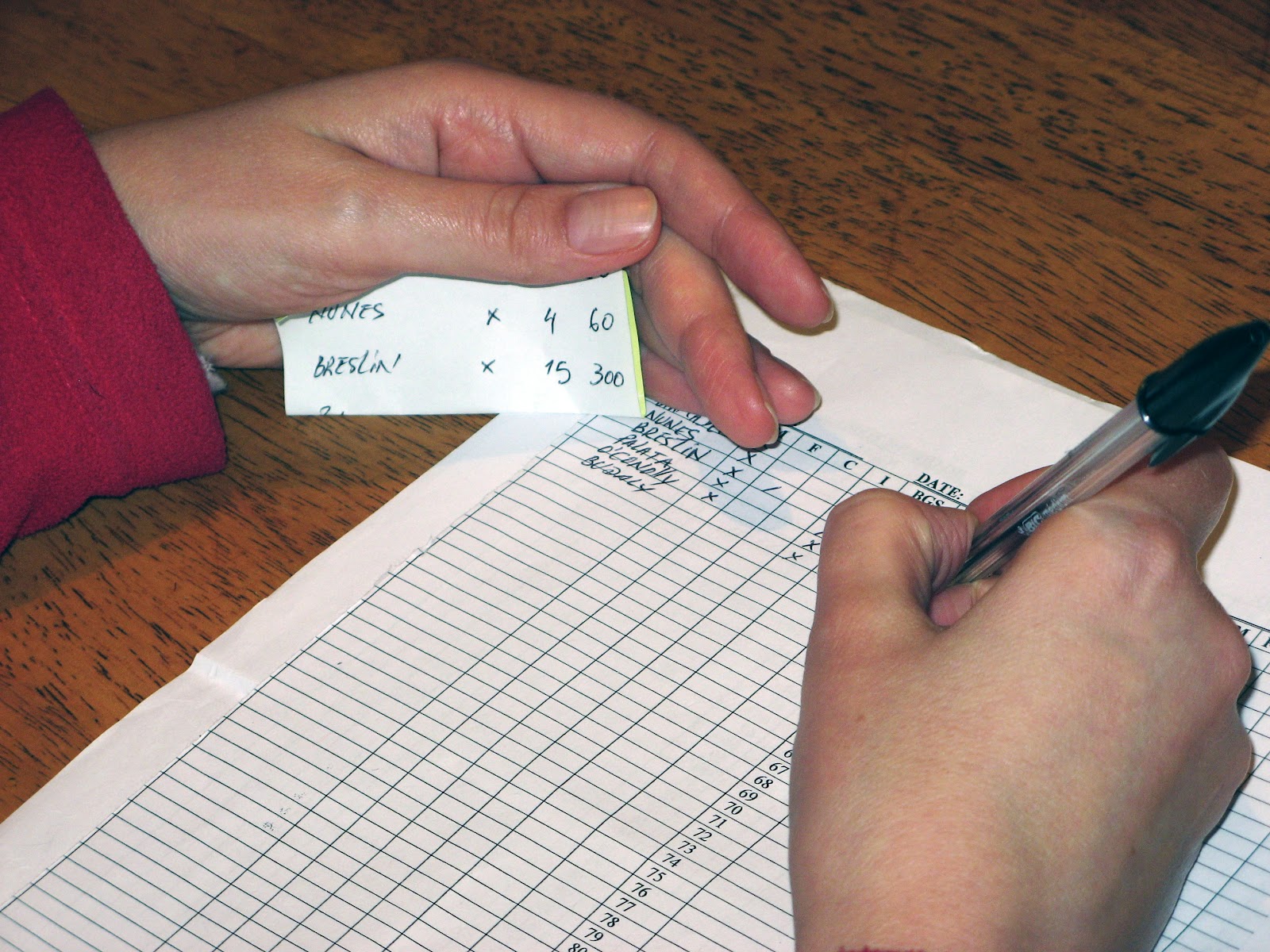
Cheating on a test by J. Fernandes
Ordinarily most of the stolen items are tangible and they remain stolen even if they are taken apart or recombined. Literary work is not like so and the objects stolen are not tangible and they are less identifiable than physical objects. Taking these ideas apart or combining them may represent creativity depending on the way it is done. Creativity therefore saves one from plagiarism and takes into account building new ideas from old ones and using existing components and combining them in a way that appears original. However, there is no convectional way of defining what accounts to a new idea and what needs to be acknowledged a variation of an existing idea (Eisner & Vicinus 2008).

Eisner & Vicinus classify Plagiarism into five types depending on how it is done. These include copy paste plagiarism, word switch plagiarism, style plagiarism, metaphor plagiarism, and idea plagiarism. To begin with, copy paste plagiarism is considered as the simplest form of plagiarism and involves borrowing a significant phrase or a whole sentence and fail to reference the source using the appropriate quotation marks. Word switch plagiarism is a case where a writer lifts a sentence from a source and changes a few words. This is considered plagiarism since the wording has just been changed instead of using the appropriate quotation marks and acknowledging the source. In most cases, writers are encouraged to paraphrase and then cite the original source.  

Style plagiarism involves a case where a writer copies the reasoning style of another writer by following a source article paragraph-by-paragraph or sentence-by-sentence. Even if the writer uses completely different words and sentences, it is still a plagiarism case since the reasoning is borrowed from someone else. Metaphors are used in normal literary work to bring about an analogy that touches the emotions better than just a plain text. Metaphors are important part of a writers’ creative writing since they make an idea clearer. Most scholars fail to come-up with their own metaphors to clarify an idea and where such a metaphor has been borrowed, it is necessary that the original author be given credit. Where the author of the metaphor is not acknowledged, this amounts to metaphor plagiarism (Eisner & Vicinus 2008).

Don't copy by J. Fernandes
Idea plagiarism applies to a case where an author of a source article comes up with a creative idea or expresses a certain solution to a problem. If another writer makes use of this idea or solution to a problem then acknowledgement must be made to the original author. However, there has been a major problem with students regarding this type of plagiarism since students find it hard to distinguish between a public domain idea and an author’s idea. In any given field, a public domain idea is what people accept as common knowledge and when students are not aware of such ideas, they should ask first to avoid plagiarism.

For students to avoid plagiarism they need to take into consideration a number of tips whenever doing academic writing. To begin with, every time a writer uses a source from the internet, there is a need to get the source and cite it appropriately. Whenever students copy and paste some work, it is good to highlight it in a different color so that it can be paraphrased appropriately when proofreading the work. Sometimes students assume that it is the number of borrowed words or the length of the sentence that determines whether there is plagiarism. However, in most of the cases it is not the length of the sentence of that matters, but a significant phrase that sticks out and remains in people’s memories. If such a phrase is used without acknowledging the source then the writer has committed plagiarism. Students often get attracted to such phrases that are eloquently expressed with a verbal impact and which every writer would be glad to use. When such phrases are used, the writer should use quotations marks appropriately and give full acknowledgement to the original author. 

Since plagiarism is an academic crime, it has a penalty just like any other crime. The institution or the instructor offering the course usually determines the penalty for plagiarism. This therefore means that the penalty is not uniform in all institutions even though some common forms exist. In most of the institutions penalty involves failure of the paper or worse still failure of the entire course (Eisner & Vicinus 2008). The worst penalty associated with plagiarism is expulsion from the school or institution. Ignorance of the rules of plagiarism is never tolerated and can never be used as an excuse. Plagiarism out of carelessness is as bad as deliberate plagiarism and the penalty is equal in both cases. Efforts should therefore be made to familiarize all the students with institutional rules regarding plagiarism so that they can avoid it as much as possible.

Reference
Eisner, C. & Vicinus, M. (Eds.). (2008). Originality, Imitation, and Plagiarism: Teaching                       Writing in the Digital Age. Ann Arbor: University of Michigan Press.