Discover Ireland

Places of interest outside Dublin

Saddle up!

Getting around Dublin

No debt, no theft, no fret

Economic Living

Pages

Showing posts with label academic. Show all posts

Tuesday, 10 April 2012

All work, no play? No way!

BY B. SIEJA, H. KUBO

Turning twenty one opens up a new world for you. Now you have to learn how to balance work and play. Dublin City University just celebrated its 21st birthday and is one of the youngest universities in Ireland. As such, it offers lots of events and entertainment. There is something for everyone, particularly newly arrived international students, allowing you to both study and socialise.

 Academic life

NuBar in The Hub by B. Vysoky
To begin with, make sure that study comes first. Do not forget that you are in the university and you have to adapt to new environment. It is beneficial that you learn new academic skills to keep up with classes and exams. DCU provides you with various academic workshops. Here is a list that might interest you:

  • Note-taking Lectures
  • Introduction to Reading Techniques
  • Academic Writing for Assignments
  • Coping with Culture Shock
  • Working in Groups
  • Time Management
  • Presentation skills
  • Managing Stress, Focus & Energy for Exam Performances
DCU Library by B. Vysoky
Workshops usually take up to two hours to complete and are presented in a relaxed and friendly way. For example, in the  ‘Working in Groups’ workshop you will be practising how to cooperate with your peers, talk about your ideas, propose new plans, etc. Training includes simulations of working on a group project.  Also, you get handouts and notes for free!  

We attended some of the workshops and what we have learned helped us in our studies and private lives. Skills such as effective time management, verbal and written communication and team work can also be practical to your future workplace. If you want to find out more, go to “Academic and Study Skills Support” on DCU homepage.

Social life

So what can hard working students do with their free time? They can participate in many of the exciting events that happen in DCU. In this article we list some of these events focusing on The Hub and The Helix. These facilities can be enjoyed by all DCU students regardless of membership of clubs and societies.

Events in the NuBar

Inside NuBar by B. Vysoky
The NuBar is a social outlet in The Hub where students can enjoy food and beverages, chatting with friends, listening to music or playing billiards. It also hosts some official DCU events. For example, last year the Inter Faith Centre organised a Christmas party for international students at the NuBar.

Every Tuesday is Toxic Tuesday at the NuBar. Drinks are available at discount prices and DJ's play the latest hot club sounds. This could be a good opportunity for stress management and utilising your communication skills. This is one of the most popular events during the semester.

The Music Society in DCU hosts Open-mic events at The Venue. You can enjoy this particular event as an audience member or participant if you wish. They provide some of the instruments and all you have to do is give your name and your chosen instrument before the event starts.

Every once in a while the NuBar offers free food for students and soft drinks at discount prices. You would be advised to get there early because the free food is limited and offered on a 'first come-first served' basis.
These and other events can be discovered on GreatCraic.ie which is the official DCU social website.

Events in The Helix

The Helix by B. Vysoky
The Helix is a state of the art theatre on the grounds of DCU. It has three performance spaces which are used by student societies and professional touring companies alike.
You can enjoy various art forms including drama, dance, film, and pantomime. The Helix also hosts guest lecturers from around the world. During the day its warm cosy atmosphere attracts students and staff. Students meet there to discuss their group projects and to socialise. At night you can attend dance recitals, live music shows, dramatic performances, old movie classics or the annual panto.

Dance recitals can be anything from hip-hop to ballet to Irish dancing. Second Age Theatre Company is well known for staging their Shakespearean productions here. Live music shows at The Helix include Orchestral, Gospel, Rock, and Pop. It is also the venue for RTE's talent show The Voice of Ireland which is a competition to win a recording contract with Universal Music. Tickets prices for all these events vary so check their website for regular updates.

DCU provides us with all the social and academic events we need in order to have a balanced college experience. Enjoy!
Friday, 23 March 2012

Is plagiarism becoming a plague?


BY J. FERNANDES 
 
The aim of this article is new students to be aware of one of the worst crime, namely plagiarism, within institutions. DCU is one of many institutions of third level education which take this matter seriously.

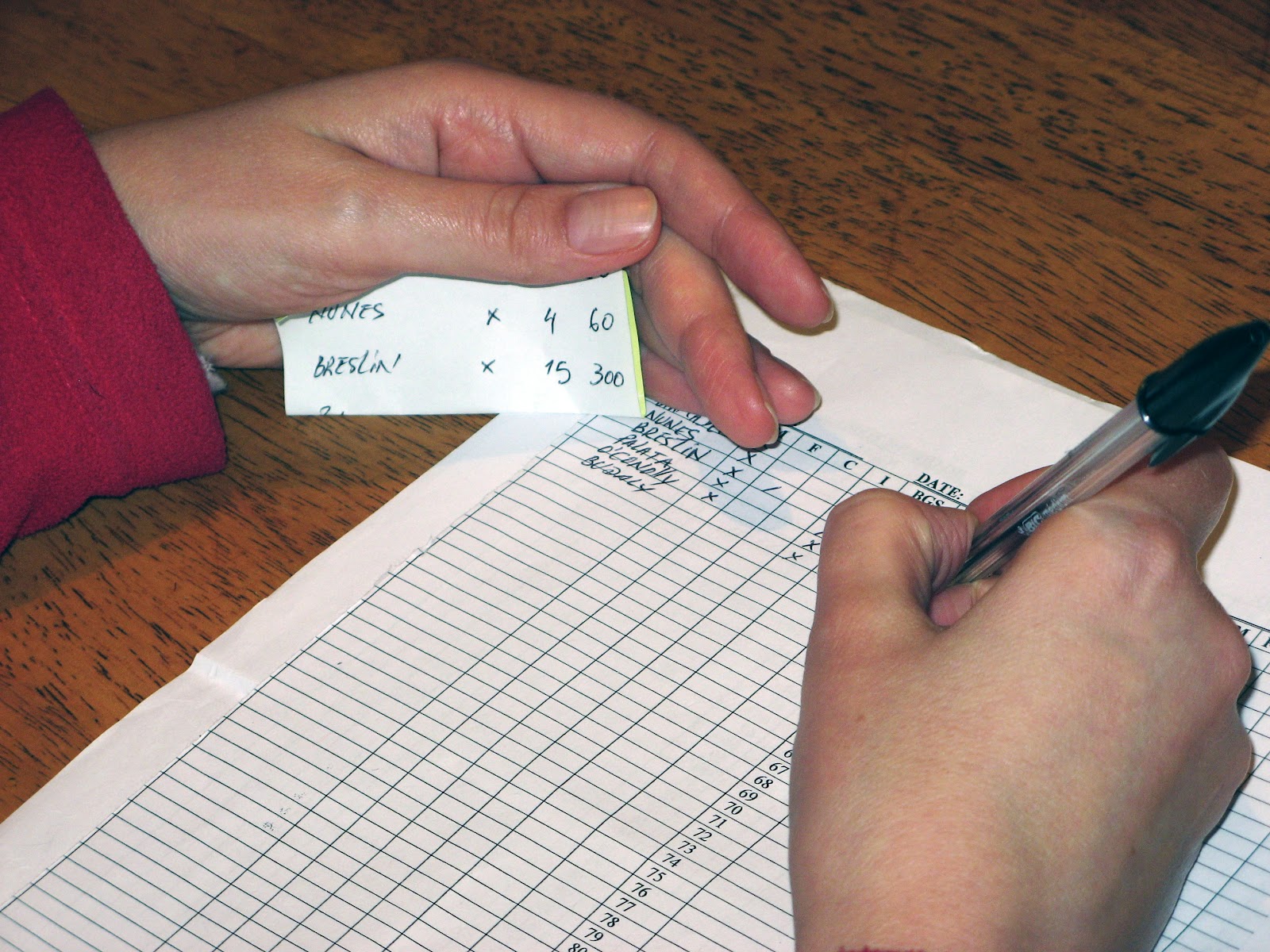
Plagiarism is one of the worst academic crimes that scholars can ever commit. As the cases for plagiarism increase, institutions have come up with stern measures to penalize the culprits and curb the menace. According to Eisner & Vicinus (2008), plagiarism refers to taking other writers’ concepts, ideas, images or phrases and using them without giving credit to the original author. Either, this can be done deliberately or through carelessness and in either cases, the effect is the same. Every academic work submitted to instructors or supervisors is expected to be original and any borrowed work without acknowledgement makes the student guilty of plagiarism. Plagiarism is different from piracy because piracy is the marketing of credited but unauthorized copies of another person’s work thus depriving the author profit. Plagiarism unlike piracy deprives the original author of credit but not profit even though both cases represent a form of theft.

Cheating on a test by J. Fernandes
Ordinarily most of the stolen items are tangible and they remain stolen even if they are taken apart or recombined. Literary work is not like so and the objects stolen are not tangible and they are less identifiable than physical objects. Taking these ideas apart or combining them may represent creativity depending on the way it is done. Creativity therefore saves one from plagiarism and takes into account building new ideas from old ones and using existing components and combining them in a way that appears original. However, there is no convectional way of defining what accounts to a new idea and what needs to be acknowledged a variation of an existing idea (Eisner & Vicinus 2008).

Eisner & Vicinus classify Plagiarism into five types depending on how it is done. These include copy paste plagiarism, word switch plagiarism, style plagiarism, metaphor plagiarism, and idea plagiarism. To begin with, copy paste plagiarism is considered as the simplest form of plagiarism and involves borrowing a significant phrase or a whole sentence and fail to reference the source using the appropriate quotation marks. Word switch plagiarism is a case where a writer lifts a sentence from a source and changes a few words. This is considered plagiarism since the wording has just been changed instead of using the appropriate quotation marks and acknowledging the source. In most cases, writers are encouraged to paraphrase and then cite the original source.  

Style plagiarism involves a case where a writer copies the reasoning style of another writer by following a source article paragraph-by-paragraph or sentence-by-sentence. Even if the writer uses completely different words and sentences, it is still a plagiarism case since the reasoning is borrowed from someone else. Metaphors are used in normal literary work to bring about an analogy that touches the emotions better than just a plain text. Metaphors are important part of a writers’ creative writing since they make an idea clearer. Most scholars fail to come-up with their own metaphors to clarify an idea and where such a metaphor has been borrowed, it is necessary that the original author be given credit. Where the author of the metaphor is not acknowledged, this amounts to metaphor plagiarism (Eisner & Vicinus 2008).

Don't copy by J. Fernandes
Idea plagiarism applies to a case where an author of a source article comes up with a creative idea or expresses a certain solution to a problem. If another writer makes use of this idea or solution to a problem then acknowledgement must be made to the original author. However, there has been a major problem with students regarding this type of plagiarism since students find it hard to distinguish between a public domain idea and an author’s idea. In any given field, a public domain idea is what people accept as common knowledge and when students are not aware of such ideas, they should ask first to avoid plagiarism.

For students to avoid plagiarism they need to take into consideration a number of tips whenever doing academic writing. To begin with, every time a writer uses a source from the internet, there is a need to get the source and cite it appropriately. Whenever students copy and paste some work, it is good to highlight it in a different color so that it can be paraphrased appropriately when proofreading the work. Sometimes students assume that it is the number of borrowed words or the length of the sentence that determines whether there is plagiarism. However, in most of the cases it is not the length of the sentence of that matters, but a significant phrase that sticks out and remains in people’s memories. If such a phrase is used without acknowledging the source then the writer has committed plagiarism. Students often get attracted to such phrases that are eloquently expressed with a verbal impact and which every writer would be glad to use. When such phrases are used, the writer should use quotations marks appropriately and give full acknowledgement to the original author. 

Since plagiarism is an academic crime, it has a penalty just like any other crime. The institution or the instructor offering the course usually determines the penalty for plagiarism. This therefore means that the penalty is not uniform in all institutions even though some common forms exist. In most of the institutions penalty involves failure of the paper or worse still failure of the entire course (Eisner & Vicinus 2008). The worst penalty associated with plagiarism is expulsion from the school or institution. Ignorance of the rules of plagiarism is never tolerated and can never be used as an excuse. Plagiarism out of carelessness is as bad as deliberate plagiarism and the penalty is equal in both cases. Efforts should therefore be made to familiarize all the students with institutional rules regarding plagiarism so that they can avoid it as much as possible.

Reference
Eisner, C. & Vicinus, M. (Eds.). (2008). Originality, Imitation, and Plagiarism: Teaching                       Writing in the Digital Age. Ann Arbor: University of Michigan Press.